
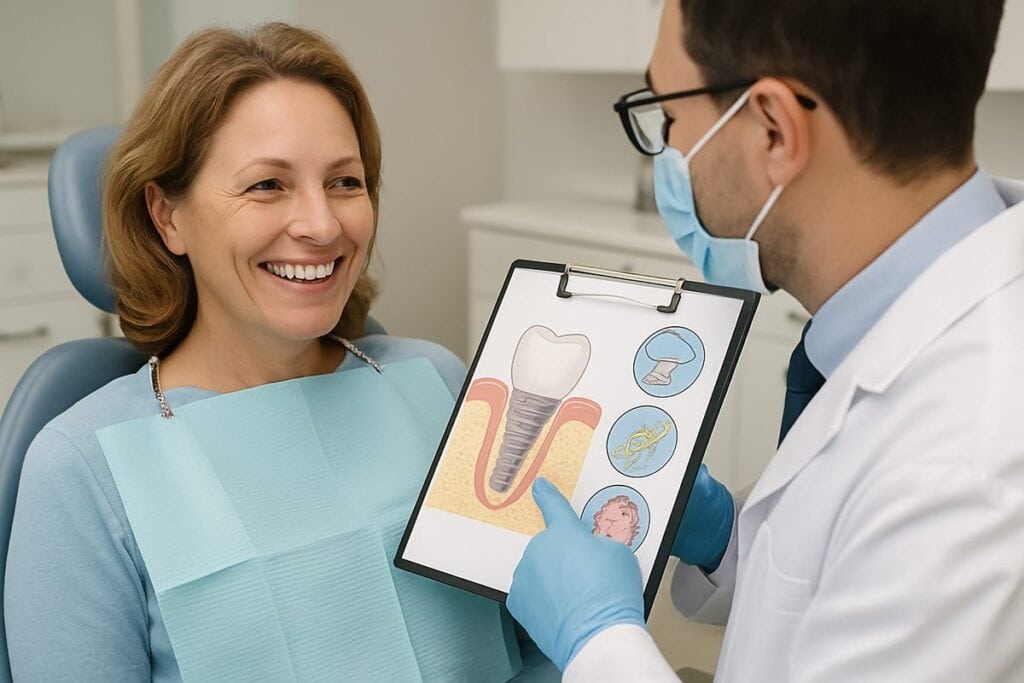
This article explains common tooth implantation side effects, when they usually occur, how to manage them at home, and when to call your surgeon. Expect straightforward guidance on pain, swelling, bleeding, numbness, healing timelines, and warning signs. If you live in Michiana, you’ll also find notes on how Oral Surgery Michiana helps reduce risks and supports recovery from tooth implantation side effects in Michiana.
Common Tooth Implantation Side Effects
Pain and discomfort
Mild to moderate pain is normal after implant surgery. Pain usually peaks the first 24–72 hours and eases over the next week. It comes from tissue trauma and inflammation as the body starts healing. Most patients control pain with over-the-counter medicines or short-term prescription pain meds when needed.
Swelling and bruising
Swelling often appears around the jaw, cheeks, and sometimes under the eye for upper implants. It is worst at 48–72 hours and slowly improves over 5–7 days. Mild bruising can show on the face or neck. Persistent or rapidly spreading swelling, especially with fever, is a concern and needs prompt review.
Minor bleeding and oozing
Light bleeding or oozing in the first 24–48 hours is common. You may notice small spots on gauze or a pinkish saliva. Bite gently on sterile gauze for 20–30 minutes to control it. If heavy bleeding soaks through gauze repeatedly, seek urgent care.
Temporary numbness or tingling
Some patients feel numbness or tingling near the lip, chin, or tongue from local nerve irritation. This usually resolves within days to weeks. Short-term numbness that improves is expected; persistent numbness is less common and needs evaluation.
Less Common But Serious Tooth Implantation Side Effects
Infection at the implant site
Signs include increasing pain after initial improvement, redness, warmth, swelling that worsens, pus, or fever. Early treatment with antibiotics and cleaning is important to protect the implant and bone.
Implant failure or loosening
Failure can happen if the implant doesn’t bond to the bone (poor osseointegration) or if infection or excessive force causes bone loss. Early warning signs are movement of the implant, worsening pain, or persistent gum problems around the implant.
Nerve injury and persistent numbness
If numbness or tingling does not improve over weeks, or you have new weakness or changes in sensation, contact your surgeon. Nerve injury is rare but may require prompt assessment and sometimes further treatment.
Sinus complications (upper implants)
Upper jaw implants near the sinus can sometimes cause sinus pain, prolonged nasal congestion, or a communication between mouth and sinus. If you notice fluid coming from the implant site when leaning forward or persistent sinus symptoms, get evaluated.
Typical Healing Timeline: What To Expect Week By Week
Day 0–3: Pain peaks, swelling begins, minor bleeding possible. Follow medication and home care instructions.
Week 1: Swelling and bruising fade. Stitches may be removed or dissolve. Pain should be much less.
Weeks 2–6: Soft tissues heal. You’ll return for checks. Minor tenderness may remain but most daily activities resume.
Longer term: Osseointegration (bone fusing to the implant) takes 3–6 months. During this period avoid heavy chewing on the implant until your surgeon clears you.
How To Manage Tooth Implantation Side Effects At Home
Pain control and medications
Use acetaminophen or ibuprofen as advised by your surgeon. Prescription pain meds are for short-term use. Avoid mixing medications without guidance. Don’t stop or start drugs your surgeon advised against; follow their directions, especially about NSAIDs if told otherwise.
Reduce swelling and bruising
Apply a cold compress for 15–20 minutes on, 15–20 minutes off for the first 48–72 hours. Keep your head elevated while sleeping for 48 hours. Stop icing after swelling improves to avoid restricting blood flow needed for healing.
Control bleeding and maintain oral hygiene
Bite on gauze to stop bleeding. Avoid rinsing hard, using straws, or spitting forcefully for 24 hours. After 24 hours, rinse gently with warm salt water several times daily. Brush carefully around the surgical site to keep it clean without disturbing sutures.
Diet, activity, and smoking
Stick to soft foods for the first week or as instructed. Avoid heavy lifting and strenuous exercise for several days. Smoking delays healing, raises infection risk, and may void warranties—stop at least until your surgeon clears you.
When To Call Your Surgeon
- Heavy bleeding that won’t stop after 30–60 minutes of pressure
- Fever over 101°F (38.3°C) or chills
- Rapidly spreading swelling or trouble breathing/swallowing
- Uncontrolled pain despite medicines
- Persistent or worsening numbness beyond a few weeks
- A loose or moving implant
How Oral Surgery Michiana Reduces Risk And Supports Recovery
Oral Surgery Michiana uses board-certified surgeons, 3D planning with cone-beam CT and intraoral scanning, and gentler surgical tools like the Piezotome® and SmoothWave i100 to lower trauma and speed recovery. IV sedation and hospital-grade anesthesia protocols improve comfort and safety. For patients in Michiana, these steps reduce common tooth implantation side effects in Michiana and help catch problems early.
The practice offers a 10-year implant warranty with required maintenance (no smoking policy) and can print same-day teeth with an in-office 3D printer for predictable immediate restorations. Financing options are available and staff will help you request a consultation to review your plan and costs.
If you want personalized expectations about tooth implantation side effects and recovery, request a consult with Oral Surgery Michiana to review your case, imaging, and options. Their team will explain risks, steps to reduce complications, and the support available during healing.