
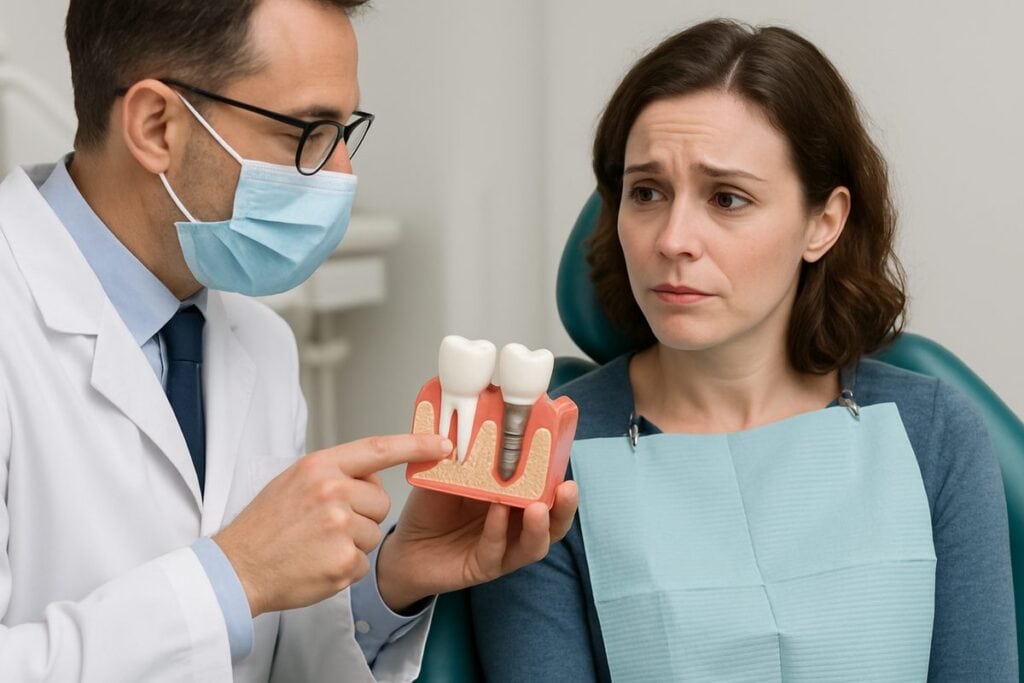
Short answer: how safe is tooth implant in Michiana? For most patients, tooth implants are very safe when placed by trained oral surgeons with good planning and follow-up. Risks exist but are uncommon and usually manageable with proper 3D imaging, sterile technique, and healing care. This guide explains common risks, the procedure, recovery, and how to choose a safe provider so you can make an informed decision.
How Safe Is Tooth Implant: Quick safety facts
Dental implants have high long-term success rates. Most studies show roughly 95% or higher success over 5–10 years, meaning failure rates are usually in the high single digits. Good candidates are people with reasonable overall health, adequate jawbone, and good oral hygiene.
- Key predictors of safety: overall health, smoking status, bone quality, and diabetes control.
- Success is higher when implants are planned with 3D imaging and placed by experienced surgeons.
- If you ask, how safe is tooth implant in Michiana (South Bend & Elkhart)? The same principles apply — safety improves with board-certified care, modern imaging, and follow-up.
Common risks and how they’re prevented
Infection
Cause: bacteria at the surgical site or poor oral hygiene. Signs: increased pain, redness, pus, fever.
Prevention: sterile technique, pre-op oral hygiene instructions, antibiotics when indicated, and careful wound care. Early treatment usually clears infection without losing the implant.
Nerve or sinus injury
Upper-jaw implants can affect the sinuses; lower-jaw implants can irritate or damage nerves. Most nerve symptoms are temporary (tingling or numbness). Permanent nerve damage is rare.
Prevention: 3D imaging, careful planning, and conservative placement lower these risks significantly.
Implant failure or poor osseointegration
Failure may occur early (during healing) or later (after loading). Common causes: poor bone, smoking, uncontrolled diabetes, or infection.
How to lower risk: bone grafting when needed, smoking cessation, medical optimization, and staged treatment when appropriate.
Anesthesia and sedation risks
Local anesthesia is very safe. IV or general sedation carries small risks like breathing or cardiac events. These risks are low when providers use hospital-grade monitoring and trained anesthesia staff.
What to expect during the implant procedure
Consultation and 3D planning
Expect a medical history review, intraoral photos, and 3D imaging like cone-beam CT to map bone and nerves. Digital scans help design the exact implant size and position. Good planning is the main safety step.
Surgical day
Placement usually takes 30–90 minutes per implant depending on complexity. Options include local anesthesia, IV sedation, or general anesthesia. Many patients can get same-day temporary teeth when conditions allow.
Bone grafting and staged procedures
When bone is thin or sinuses are low, grafts or lifts may be needed. These add healing time but improve long-term safety and success. Your surgeon may stage the work to reduce risk and improve outcomes.
Recovery, aftercare, and long-term maintenance
Typical healing: the implant bonds to bone (osseointegration) over 3–6 months. Expect some swelling and soreness for a few days. Follow pain control, soft foods, and activity limits as directed.
Signs to seek urgent care: high fever, spreading facial swelling, uncontrolled bleeding, sudden severe pain, or new numbness that doesn’t improve.
Long-term care: regular dental visits, professional cleanings around implants, daily brushing and flossing, and avoiding smoking. With good care, implants can last decades.
Choosing a safe provider: what to look for
- Board-certified oral and maxillofacial surgeons or experienced implant specialists.
- Hospital-grade anesthesia training and continuous monitoring for IV/general sedation.
- Advanced imaging (CBCT/Cone Beam) and digital workflows (intraoral scanning).
- Clear consultation process, documented outcomes, and patient reviews.
- Options for same-day provisional teeth and in-house digital manufacturing are a plus.
Why Oral Surgery Michiana may matter for safety
Oral Surgery Michiana emphasizes surgical training and high-safety standards. Their board-certified surgeons have fellowship/residency training and hospital-grade anesthesia with continuous monitoring. They use i-CAT CBCT and Medit intraoral scanners for precise planning, Piezotome and SmoothWave tech to reduce tissue trauma, and in-house 3D printing to provide same-day temporary teeth.
The practice supports outcomes with a 10-year implant warranty (with required maintenance and a no-smoking policy) and multiple financing options. These policies and technologies are designed to lower risks and improve predictability for patients asking, how safe is tooth implant in Michiana?
Quick FAQ and when to call your surgeon
- Is implant surgery painful? Most patients report manageable pain controlled with medication. Swelling and soreness are common for a few days.
- When will I get a crown? Final crowns usually come after 3–6 months of healing, unless a same-day provisional is placed.
- How long do implants last? With good care, implants often last 15–30+ years; many last a lifetime.
- When to call now? Call immediately for fever with spreading swelling, heavy or uncontrolled bleeding, severe worsening pain, or new persistent numbness.
Next steps
If you’re asking “how safe is tooth implant” for your situation, request a consultation with 3D imaging to get a personalized safety plan. A tailored exam, CBCT scan, and clear plan will show your risks, options, and whether same-day temporary teeth or staged care is best for you.